RAPE UNDER SECTION 63 OF BHARATIYA NYAYA SANHITA

0 Comments

THE LAWWAY WITH LAWYERS JOURNAL VOLUME:-11 ISSUE NO:- 11 , MAY 10 , 2024 ISSN (ONLINE):- 2584-1106 Website: www.the lawway with lawyers.com Email: thelawwaywithelawyers@gmail.com Authored by:- Shuvangi Mishra RAPE-UNDER-SECTION-63-OF-BHARATIYA-NYAYA-SANHITA    INTRODUCTION : Crime against women is a worldwide concern. In their lifetime, one in three women worldwide will encounter physical or sexual abuse. This indicates that the problem affects about one billion women. Sexual assault, murder, domestic abuse, and rape are the most common forms of violence against women. Forced prostitution, unspoken retaliation, and dowry issues are the main causes of violent crimes. People of any caste, religion, creed, or race can be victims of violence against women. Since women make up between 48 and 49 percent of the population, aggression, violence, and criminality against them are serious issues. Given the issue’s significance, I have dedicated two chapters to gender discrimination and violence against women. Crime, violence, and discrimination against women are all connected and have overlaps with one another. Anger and aggression directed towards men lead to gender discrimination, criminal activity, and acts of violence. Men are more aggressive and dominant than women both biologically and socially, with women perceived as a weaker segment of society even though this is not the case. As a result, they become the object of prejudice, assault, and criminal activity by the dominant social class in society—men. “Any act of gender-based violence that results in, or is likely to result in, physical, sexual, or psychological harm or suffering to women, including threats of such acts, coercion, or arbitrary deprivation of liberty, whether occurring in public or in private life,” is how the UN General Assembly defined violence against women in 1993. The realization of women’s and girls’ human rights, as well as equality, development, and peace, remain hampered by violence against women. In general, the Sustainable Development Goals (SDGs), which aim to “leave no one behind,” depend on ending violence against women and girls.   WHAT IS RAPE?   Rape is defined as illicit sexual activity, which is most often sexual relations, carried out against the will of the victim by force or threat of force, or with someone incapable of giving informed consent due to their status as a minor, a mental illness, a mental deficiency, intoxication, unconsciousness, or deceit. Sexual assault has replaced rape as a separate crime in many jurisdictions. Rape is now recognized as a pathological exercise of power over a victim, even though it was formerly thought to be the result of uncontrollable sexual. The FBI revised its definition of rape in 2012; it was previously defined as “the carnal knowledge of a female forcibly and against her will.” The new definition is: “Oral penetration by a sex organ of another person, without the victim’s consent, or penetration, no matter how slight, of the vagina or anus with any body part or object.” Though they differ from state to state, rape laws generally define it as forced sexual contact or penetration of an unwilling party. According to the FBI’s revised definition, unwanted fellatio, cunnilingus, and anal penetration are also considered rape under modern laws. Furthermore, any forced sexual act on a person, regardless of gender, is considered rape. There’s no need to use a weapon.   RAPE UNDER BHARATIYA NYAYA SANHITA : Section 63 : Defination Of Rape The BNS defines rape and classifies the different acts that fall under this offense in Section 63. These behaviors, which fall under seven distinct categories, range from penetrations using objects or body parts to manipulations that lead to penetrations. Consent is considered, along with factors like age, mental health, and communication skills.   Section 64: Punishment For Rape The BNS’s Section 64 imposes harsh penalties on rape. Generally, the punishment is strict incarceration for a minimum of ten years, with the possibility of up to life, plus a fine. Nonetheless, in certain circumstances—such as when a public servant, member of the armed forces, or someone is raped—the severity of the punishment increases.   Section 65: Punishment For Rape In Certain Cases   Crimes involving the rape of minors are covered in this section. Rapists who target women under the age of sixteen or twelve face severe punishments, which can include life in prison, a minimum of twenty years in jail, or even the death penalty. The victim’s rehabilitation and medical costs will be paid for with the fine imposed.   Section 66: Punishment For Causing Death Or Persistent Vegetative State   If the victim of rape dies or is left in a persistent vegetative state, the perpetrator faces the death penalty, life in prison, or a minimum of twenty years of rigorous imprisonment.    Section 67: Sexual Intercourse By Husband Upon His Wife During Separation   The BNS addresses a husband’s having sex with his separated wife without her consent because it recognizes the importance of marital consent. Respecting spousal autonomy is crucial because of the two to seven years of imprisonment and fines that offenders face.   Section 68: Sexual Intercourse By Person In Authority  This section addresses sexual activity by public employees, individuals in positions of authority, and individuals in charge of institutions. Offenders who abuse their position or fiduciary relationship to have sex risk a fine and a five to ten-year sentence of rigorous imprisonment.   Section 69: Sexual Intercourse By Employing Deceitful Means, etc   This section deals with having sex after making false promises or using dishonest tactics. The penalties are ten years in prison and a fine. False promises of marriage, a job promotion, or employment are examples of deceptive tactics.   Section 70: Gang Rape Given the seriousness of group offenses, the law stipulates that those convicted of gang rape must serve a rigorous minimum of twenty years in prison, with the possibility of a life sentence. The fine levied goes toward the victim’s rehabilitation and medical costs.   Section 71: Punishment For Repeat Offenders   If someone is found guilty again under certain sections about sexual offenses, they could be sentenced

Interpretation of the Maternity Benefit Act, 1961 and 2017: A Legal Issue. 

0 Comments

THE LAWWAY WITH LAWYERS JOURNAL VOLUME:-11 ISSUE NO:- 11 , MAY 5 , 2024 ISSN (ONLINE):- 2584-1106 Website: www.the lawway with lawyers.com Email: thelawwaywithelawyers@gmail.com Interpretation of the Maternity Benefit Act, 1961 and 2017: A Legal Issue.    Abstract   Over the last ten years, there have been significant changes in developing societies. Women  have contributed significantly to this decade-long expansion, which has had a positive impact  on the existing social and economic institutions. Even though the data indicate a severely  skewed gender ratio in the labour force, one cannot ignore the contribution made by women in  developing the skilled labour force in the nation. Developing nations must recognize this  critical role and offer leverage to reconcile the gender-centric roles of men and women. The  idea of social justice has changed recently in order to achieve this goal. This idea originated  with the way judges interpreted laws that were passed to help communities that needed  assistance and care. The Maternity Benefits Act, 1961 (and its recent amendment of 2017) is  one example of progressive labour laws. It was created in response to the need for protection  for working women in sensitive situations, such as pregnancy, to prevent harassment on the  grounds of work obligations. In addition to these statutes, the judiciary has contributed equally. It regulates pregnant women’s employment prior to, during, and following childbirth. This  article offers a perceptive analysis of the Act’s contents, including the significant changes made  by the 2017 Maternity Benefit (Amendment) Act. The Act is applicable to any organization  that employs ten (10) or more people. As to the Act, every woman who has worked for an  organization for a minimum of eighty (80) days is eligible to receive maternity benefits. All of  India is covered by the act, with the exception of Jammu & Kashmir. This act’s primary goal is  to provide working women with social fairness.  Keywords: The maternity benefit act 1961, social justice, Legislations, development, Labour  laws. INTRODUCTION:  The law passed to safeguard women’s rights during pregnancy is known as the Maternity  Benefit Act of 1961.1It controls pregnant women’s employment prior to, during, and following  childbirth. Through this Act, working women receive specific financial benefits throughout  their maternity leave. On December 12, 1961, the Union of India passed the Maternity Benefits  Act of 1961, which came into effect after the nation gained its independence. In accordance  with the then-current international standards, the statute offered conditional benefits for  pregnancy, childbirth, and problems associated to such conditions. Despite the fact that India  was still a developing country and this Act covered a wide range of topics with great care and  accuracy, giving careful consideration to many different aspects of factors impacting maternity  benefits. The Maternity (Amendment) Bill 2017,2 which was approved by the Lok Sabha on  March 9, 2017, amends the Maternity Benefit Act, 1961. The aforementioned Bill was  subsequently approved by the Rajya Sabha on August 11, 2016. Moreover, on March 27, 2017,  the President of India gave his approval. The Maternity Benefit (Amendment) Act, 2017 (the  “Amendment Act”) went into effect on April 1, 2017, while Section 111 A, which deals with  crèche facilities, became operative on July 1.  The most recent research in this field conducted in India indicates that India complies with  international conventions. This article summarises the benefits suggested by international  standards and provides a summary of maternity benefits available in the nation. Along with  providing a limited comparison with other countries on the same topic, it also aims to  aggregate all recent studies relevant to India. Legislation is intended to assist parents before  they return to the workforce and during their postpartum recuperation. They offer the mother  peace of mind during this time by guaranteeing benefits in addition to her work security and  pay. The article also seeks to provide country dwellers with a basic understanding of the law.  OBJECTIVE OF MATERNITY ACT:   The main objective of the Act to remove the barriers that women encounter when they  become parents. Making it feasible for women to manage work and parenting without having  to make compromises is the Act’s main objective. Germany set the trend for the rest of the   1India code, https://www.indiacode.nic.in/bitstream/123456789/17115/1/maternity_benefit.pdf ( last visited  on 12 June 2024)  2 Ministry of Labour and Employment,   https://labour.gov.in/sites/default/files/maternity_benefit_amendment_act2017_ ( last visited on 12 June  2024) world by establishing maternity benefits by the end of the 19th century. The Act forbids  terminating a female employee while she is on maternity leave. It guarantees women’s  employment stability during the critical times of pregnancy and childbirth. In addition to  maternity leave, this also offers women employees a medical bonus. Its purpose is to pay for  maternity and delivery-related medical costs.  HISTORY OF MATERNITY ACT IN INDIA:  In 1928, the Bombay Presidence of British India made the first reference to maternity  benefits or leave in the government of India. Our analysis of the literature shows that Dr.  Babasaheb Ambedkar was a fervent advocate and propagator of the concept of maternity  benefits. He was observed advocating for the Bombay legislature’s maternity benefits.  When it came to maternity benefits, India first exclusively offered them to women who  worked in factories. It is clear that the act’s goal was to protect women employed in the  formal sector of the economy from harm. Women who work in agriculture or other  unorganized sectors of the economy were ignored. Additionally, rather than providing  adequate child care for the first several days, it concentrated exclusively on the mother’s  prenatal care.  RESEARCH METHODOLOGY:  Research methodology used in this topic is quantitive methods. It includes secondary data. The  secondary data has been taken from different sites and reports. Like reports of different  countries have been used to understand the benefits under this act. Bare act has been used for  articles and definition of articles.  WHAT IS MATERNITY LEAVE?  Maternity leave is any type of paid leave for expecting employees. The amount of leave that  an employer or organization must give pregnant women before and after the kid is delivered  is as follows:   Pregnant women

Bridging the Gap: Solutions for Employment and Accessibility Challenges Faced by Individuals with Autism Spectrum Disorder

0 Comments

THE LAWWAY WITH LAWYERS JOURNAL VOLUME:-11 ISSUE NO:- 11 , MAY 5 , 2024 ISSN (ONLINE):- 2584-1106 Website: www.the lawway with lawyers.com Email: thelawwaywithelawyers@gmail.com   Bridging the Gap: Solutions for Employment and Accessibility Challenges Faced by Individuals with Autism Spectrum Disorder   Authored by:- MRITTIKA SENGUPTA INSTITUTE OF ENGAGEMENT: Techno India University, West Bengal Abstract Autism spectrum disorder (ASD) presents formidable hurdles for individuals, affecting their social interaction, communication, and behaviour. Despite being recognized as individuals with disabilities under India’s Rights of Persons with Disabilities Act, 2016, those with ASD encounter impediments in exercising basic rights such as employment and accessibility due to prevailing gaps in infrastructure and implementation deficiencies. This article proposes remedies to tackle these obstacles. Employment barriers range from employer unawareness and workplace discrimination to limited job prospects, while accessibility issues encompass insufficient infrastructure, lack of digital platform features, and difficulties accessing vital services like healthcare and education. Proposed solutions advocate enforcing accessibility standards with penalties for non-compliance, fortifying enforcement mechanisms, and conducting regular assessments of infrastructure and digital platforms to identify and rectify accessibility gaps. Additionally, effective social protection measures will be facilitated through robust monitoring and evaluation mechanisms and collaboration with civil society organizations. This article underscores the urgency of addressing the employment and accessibility challenges faced by individuals with ASD, emphasizing the necessity for proactive measures to ensure equality and inclusivity. It calls for collaborative efforts among stakeholders to implement these solutions and foster a more inclusive society for individuals with ASD. Keywords: Right to Employment, Right to Accessibility, Autism, Insufficient Infrastructure, Social Protection Understanding Autism: Impacts, Dynamics, and Legal Definitions in the Indian Context In India, where diversity is celebrated, legal frameworks recognize the spectrum of autism and aim to provide support and protection. As awareness and recognition of autism spectrum disorder (ASD) continue to grow in India, there is a pressing need to delve deeper into the unique socio-cultural, economic, and healthcare landscapes that shape the experiences of individuals on the spectrum and their families. This inquiry extends beyond mere diagnosis, delving into the diverse manifestations and complexities of autism, including its impact on social interactions, communication, and sensory processing. Moreover, navigating legal definitions and frameworks pertaining to autism rights and support adds another layer of significance, shaping access to education, healthcare, employment, and societal inclusion. In this examination, we embark on a journey to unravel the intricate tapestry of autism in India, shedding light on its profound impacts, dynamic nature, and evolving legal landscape to foster greater understanding, advocacy, and support for individuals on the autism spectrum. Let’s delve into its impacts, dynamics, and legal definitions with some examples: Impacts: ‘Autism often exerts profound impacts across social interaction, communication, and behaviour. Individuals with autism frequently encounter challenges in deciphering social cues, making tasks like maintaining eye contact during conversations particularly daunting, potentially leading to feelings of isolation or misunderstanding’. Moreover, ‘verbal and non-verbal communication can be hindered, with some individuals exhibiting repetitive speech patterns like echolalia or possessing a limited vocabulary, thereby impeding effective expression’. Additionally, ‘repetitive behaviours and intense fixations are commonplace, such as organizing objects in a specific manner or displaying fervent interest in niche subjects like trains or maps’. These manifestations underscore the complexity of autism spectrum disorder and highlight the diverse ways it affects individuals. Dynamics: Individuals with autism frequently grapple with heightened sensitivity to sensory inputs, experiencing discomfort or distress from stimuli like bright lights, loud noises, or specific textures. Such sensitivities can trigger meltdowns or intense reactions. Moreover, ‘maintaining predictable routines offers a sense of comfort and stability, with even minor deviations potentially causing anxiety or agitation’. Conversely, autism also unveils unique strengths amidst its challenges. Many individuals excel in diverse domains like mathematics, music, or visual arts, highlighting the richness of talent within the autism spectrum. These dynamics underscore the multifaceted nature of autism, encompassing both difficulties and remarkable abilities. Legal Definitions in India: The Rights of Persons with Disabilities Act, 2016, is an extensive legal framework that acknowledges autism as a disability, guaranteeing equitable opportunities, protection against discrimination, and access to essential services such as education, employment, and healthcare. Additionally, the National Trust Act of 1999 establishes the National Trust to safeguard the welfare and independence of individuals with autism and other disabilities, fostering their inclusion in society. Furthermore, the Indian Penal Code offers legal protections against discrimination, abuse, and exploitation of individuals with autism, ensuring their rights and dignity are preserved under the law. These legislative measures collectively aim to create a supportive and inclusive environment for individuals with autism within the Indian legal context. In essence, understanding autism requires recognition of its diverse impacts and dynamics. In the Indian legal context, frameworks strive to uphold the rights and well-being of individuals with autism, fostering an inclusive and supportive society. Navigating Challenges: Autism in Indian Society Navigating the challenges of autism within Indian society requires a nuanced understanding of the intersectionality between cultural norms, societal perceptions, and the lived experiences of individuals on the autism spectrum and their families. While awareness of autism has grown in recent years, deeply entrenched stigmas, limited resources, and gaps in support systems continue to pose significant hurdles for those affected. In India, where familial bonds and community dynamics play a central role, the journey of navigating autism often involves grappling with societal expectations, accessing appropriate services, and advocating for acceptance and inclusion. This exploration delves into the multifaceted challenges faced by individuals on the autism spectrum and their families within the Indian context, highlighting the need for holistic approaches that address cultural sensitivities, promote awareness, and foster meaningful support networks to enable individuals with autism to thrive within their communities. Navigating challenges associated with autism in Indian society can be complex due to various cultural, social, and economic factors. Here are some examples illustrating these challenges: Stigma and Misconceptions: Autism is often misunderstood in Indian society, leading to stigma and discrimination against individuals with autism and their families. Some misconceptions include beliefs that autism is

   OFFENENCES AND CRIMES AGAINST FOREIGNERS IN INDIA 

0 Comments

THE LAWWAY WITH LAWYERS JOURNAL VOLUME:-10 ISSUE NO:- 10 , APRIL 28 , 2024 ISSN (ONLINE):- 2584-1106 Website: www.the lawway with lawyers.com Email: thelawwaywithelawyers@gmail.com OFFENENCES AND CRIMES AGAINST FOREIGNERS IN INDIA    Karunya budha sree   Sri Padmavati viswavidyalayam  ABSTRACT:-  Indian penal code 1860 deals with crime and offences, crime is action that causes offence to commit crime one must need both actus rea and mens rea which means action that leads to crime and intention of doing crime if this both are present then an action or act causing injury is called crime offence is similar but it is violation of a law in general which is punishable under specific laws  for an example chapter VI of IPC etc…speaks about various offences , India being one of globally recognized country is facing issues regarding crimes and offences not only regarding Indian citizens but also in case of foreign nationals and Tourists, Indian constitution under  Part III of constitution provide fundamental rights to all  both to citizens and non citizens of india under article 21 Right to life comes protection of life and personal liberty , This article is violated when crimes and offences increase leading to violation of article 14 , 19 simultaneously further it creates a major impact on reputation of india globally  , further and most importantly it leads to injustice to non  citizens of Indians and foreigners , the crime and offences against foreigners have grown from time to time which needs to be resolved as early as possible    KEY WORDS :- Crime , Offences ,Foreigners , Violence , Threat , India , Law  and Non – citizens .  INTRODUCTION:-  India is known for its rich culture and heritage and unique ethnicity, making it home for various cultural people further  India believes in system of ‘ATHIDHI DEVO BHAVA’ and ‘VASUDHAIVA KUTUMBAKAM ‘ which means guests are equal to god and entire world is one home but this concept in reality is not being implemented as crimes against foreigners have rapidly increased in India foreign tourists and students are often victims of Theft , Robbery ,Kidnapping and abduction etc….   creating  un safe environment for tourists who visit india .  Recently Spanish women rape case in Dumka district of Jharkhand has shocked everyone not only women was gang raped by 8 people, her husband was assaulted and they were looted 10,000/- rupees not only this case they are many cases as such that were reported to police stations but very few cases are ending up in courts and trails further many cases are not disposed by are kept in hold making victim suffer for longer time.  Which is not creating a positive impact on the society and foreign tourism?  CRIMES REPORTED BY FOREIGNERS:-  The crimes that are reported in general are Theft , Assault ,Assault on women with the intent to outrage her modesty , Sexual harassment , Rape ,Murder , cheating , forgery , simple hurt ,Immoral trafficking ,Human trafficking ,Kidnap and abduction and Attempt to murder  They are 886 Theft cases, 148rape cases, 144Cheating cases, 84simple hurt cases, 79 murder cases 79 Robbery cases 65Immoral trafficking cases 57 trafficking cases 38 kidnap and abduction cases 35 forgery cases 31 attempt to commit murder cases 180 assault and outraging modesty cases  are present from 2016 to 2022 Especially women are becoming victims of gang rape and rape in Datia district a Swiss tourist was gang raped, in 2022 Latvian women was abducted gang raped and murdered from a resort in Trivandrum Kerala not only that they are many such cases they are also reports on tourist guides misbehavior and cheating and financial frauds, however rather than financial crimes physical crimes have rapidly increased.  In case of State vs. Jyothish Prasad and others [2009] also known as The dawn Griggs case  an Australian women aged 60 years took a cab or taxi the taxi driver  took her off road  to isolated area  gagged her and raped with his pals and looted her luggage and left her dead  not only this they are various cases were foreigners were targeted and cruelly suffered In case of  (Suo motto vs state of Rajasthan [2005] )a German lady has visited Jaipur and after exploring city and having dinner she took auto rickshaw to hotel driver of auto rickshaw  drove auto off road and took her to outskirts and he and his friend raped her while they were doing the act the screams of women attracted nearby villagers who rescued her and brought to nearby village  not only rape and sexual offences on tourists they are various cases were student were also targeted further there is immoral trafficking and forced sex work is also done with foreign citizens .  TRIALS AGAINST CRIMES ON FOREIGNERS – very few cases are being addressed and successfully getting a trial but majority of cases are delayed due to slow trail and lack of proper administration and jurisdiction , Indian judiciary has a lot of cases to be disposed making the trials slow and this is a drawback for getting a quick trial and even though the trial is done it takes long years to attain justice to victims staying for longtime is not possible most of the time as there might be visa and passport issues for foreign citizens and there halting and  staying in india might not be possible for longer duration leading them to suffer more .  IMPACT OF THIS CRIME –  Impact on tourism – due to increase of crime rate tourism will be reduced and this effects Indian tourism and commerce, leading to bad reputation on Indian tourism further due to increase in crime rate tourist might not choose India as traveling spot similarly due to crime rate Indians may face difficulty in traveling to other countries.  Impact on global platform – Indian and foreign relations will be effected due to crime on foreigners which might affect cordial relationship, trade and Indian students and others in foreign nations they might be

DIGITAL DIVIDES: A COMPARATIVE ANALYSIS OF CYBERCRIMES AGAINST  WOMEN IN RUSSIA AND INDIA 

0 Comments

THE LAWWAY WITH LAWYERS JOURNAL VOLUME:-10 ISSUE NO:- 10 ,April 20, 2024 ISSN (ONLINE):- 2584-1106 Website: www.the lawway with lawyers.com Email: thelawwaywithelawyers@gmail.com DIGITAL-DIVIDES-A-COMPARATIVE-ANALYSIS-OF-CYBERCRIMES-AGAINST-WOMEN-IN-RUSSIA-AND-INDIA   Dr. Pallavi Singh  Assistant Professor of Law   Central University of South Bihar  Аnastasia Ochkina  Assistant of the Civil Law Department   Saratov State Law Academy  Abstract  The cyber divides that exacerbate risks for women in both Russia and India are the main topic of  this paper’s comparative study of cybercrimes against women. The spread of technology in recent  years has created previously unheard-of opportunities as well as new targets for abuse. Using a  range of sources such as scholarly investigations, official documents, and case studies, this study  looks at how the different judicial systems and socio-cultural settings in these two nations affect  the experiences of female victims. It looks at the types and frequency of cybercrimes against  women, such as financial fraud, revenge porn, cyberstalking, and online harassment. The efficacy  of current laws and law enforcement tactics in combating these crimes and offering assistance to  victims is also examined in this article. This study intends to provide insights for policy  suggestions and actions targeted at reducing digital gaps and improving women’s security in the  digital sphere by shedding light on the parallels and differences between Russia and India.  Keywords: Cybercrime, Cyberlaws, India, Russia, Technology.  Introduction  Technology has completely changed how civilizations connect, communicate, and operate in the  modern digital age. Although this change has opened up previously unheard-of possibilities for  advancement and connection, it has also revealed a darker side marked by cybercrimes, especially  against weaker demographics like women. The delicate relationship between gender dynamics and  the changing digital world is highlighted by cybercrimes against women, which pose a serious  global concern. In this regard, comprehending the subtleties of cybervictimization becomes  crucial, especially in countries with distinct sociocultural settings like India and Russia. The purpose of this article is to compare cybercrimes against women in Russia and India, two  nations with very different technology infrastructures, legal systems, and sociocultural  backgrounds. We want to explore the similarities, differences, and underlying causes of the digital  inequalities that exacerbate women’s vulnerability by looking at the experiences of female victims  in these different settings. With its history of governmental monitoring and technological  competence, Russia offers a complex environment for studying cyber victimisation. While the  quick growth of internet connection has made everything more connected than before, it has also  created an environment that is ideal for cyber exploitation. Russian women are subject to a wide  range of online risks, such as financial fraud, revenge porn, harassment, and cyberstalking.  Furthermore, there are substantial obstacles because of ingrained patriarchal attitudes and the lack  of comprehensive legal measures.  However, India is a rapidly developing digital economy characterised by wide socioeconomic  gaps. Internet penetration has expanded as a result of the nation’s quick digitalization initiatives,  especially among metropolitan people. But this digital transformation has also made women more  vulnerable to online abuse, financial frauds, and cyberbullying, among other forms of  cybervictimization. The intricate legal structure and varied cultural milieu of India make it more  difficult to address cybercrimes against women, calling for specialised interventions and strong  enforcement measures. This study intends to add to a nuanced knowledge of cyber victimisation  and improve evidence-based preventative and intervention efforts by contrasting the experiences  of women in Russia and India. This article aims to advocate for improved safeguards and  empowerment for women worldwide by shedding light on the digital divisions that sustain gender  inequality in cyberspace via thorough research and analysis.   A Comparative Overview of Cybercrimes Against Women  Cybercrimes against women comprise a variety of malevolent actions carried out via digital  channels that specifically target women according to their gender. These crimes can take many  different forms, including as harassment, exploitation, and fraud. They are frequently motivated  by power disparities and gender-based discrimination. These cybercrimes seriously jeopardise  women’s safety, wellbeing, and socioeconomic stability in both Russia and India.  One of the most common types of cybercrimes against women is harassment, which includes  sharing sexually explicit information without permission, cyberbullying, and online stalking. In  digital areas such as messaging apps, online forums, and social media platforms, harassment of  women is a common occurrence for women in Russia and India. Such harassment can have severe  psychological repercussions for victims, including stress, worry, and terror. Vulnerable women  are frequently the focus of cyberbullying, which preys on their trust and takes use of their  weaknesses for illicit financial gain or other reasons. This covers things like trafficking, sextortion,  and internet grooming. There are differences in the prevalence of exploitation between Russia and  India that can be attributed to differences in socioeconomic status, cultural standards, and the  efficiency of law enforcement.  Fraudulent schemes also present serious threats to women in both nations, such as identity theft,  phishing scams, and online financial fraud. Cybercriminals take advantage of women’s gullibility  and trust to trick them into sending money under false pretences or divulging private information.  Such fraud has an impact that goes beyond monetary losses; it may lead to social isolation, mental  pain, and reputational harm. Russia and India have different patterns and tendencies when it comes  to the frequency and occurrence of cybercrimes against women. Although Russia has a highly  developed technology infrastructure and a high rate of internet access, it also has issues with state  sponsored monitoring and a lack of strict implementation of laws against cybercrime. On the other  hand, although the digital environment in India is expanding quickly, a sizeable portion of the  populace does not have access to cybersecurity or basic computer literacy. In spite of these variations, the effect on victims is quite consistent. Both nations suffer greatly  from the psychological pain, strained social ties, and threatened economic stability caused by  cybercrimes against women. To tackle these issues, legislators, law enforcement agencies, IT  corporations, and civil society organisations must work together to improve cybercrime victim  care systems, prosecution strategies, and preventative measures.  Factors Involved with Cybervictimization  A complex interaction between technological, legal, and sociocultural elements shapes cyber  victimisation

MATRIMONIAL SETTLEMENTS: A DELICATE DANCE IN THE INDIAN LEGAL LABYRINTH

0 Comments

THE LAWWAY WITH LAWYERS JOURNAL VOLUME:-10 ISSUE NO:- 10 , APRIL 5 , 2024 ISSN (ONLINE):- 2584-1106 Website: www.the lawway with lawyers.com Email: thelawwaywithelawyers@gmail.com MATRIMONIAL-SETTLEMENTS-A-DELICATE-DANCE-IN-THE-INDIAN-LEGAL-LABYRINTH In the kaleidoscope of Indian marriages, where tradition and societal expectations intertwine, matrimonial settlements offer a pre-determined course of action in the stormy seas of separation or divorce. However, venturing into these agreements can feel like entering a labyrinth, one fraught with intricate legalities, uncertainties, and potential pitfalls. This article delves deeper into the complexities of matrimonial settlements in India, exploring the legal framework, relevant case laws, and the inherent gamble associated with them.   Types of Matrimonial Agreements   The Indian legal system recognizes two primary types of matrimonial settlements:   Prenuptial Agreements: These agreements, documented before marriage, outline the division of assets and financial obligations in case of divorce or separation. While not explicitly recognized under a specific law, their validity has been upheld by several judgments. Postnuptial Agreements: Executed after marriage, these agreements serve similar purposes to prenuptial agreements but require stricter scrutiny by the courts to ensure fairness and absence of coercion.   Types of Matrimonial Settlements: Permanent Alimony: Regular payments made by one spouse to the other for their financial support post-divorce. (e.g., P. V. Chandrasekhara Rao v. D. Dwaraka Bai, AIR 1977 SC 1836) Division of Property: Fair division of assets accumulated during the marriage. (e.g., Pratap Chandra vs. Kunwar Rani, AIR 2009 SC 305) Maintenance of Children: Financial support provided for the upbringing of children. (e.g., Bachoo Singh v. Mst. Zarina, AIR 2005 SC 3100) Return of Stridhan: Return of property belonging exclusively to the wife. (e.g., Smt. Sunita Rani v. Kundan Lal, AIR 2005 SC 304)   The Evolving Legal Landscape   The concept of prenuptial agreements in India is relatively new and evolving.  The landmark case of Yusuf Abdul Aziz vs. Snehlata Mehrotra (2002)  acknowledged the enforceability of prenuptial agreements, provided they are:   Freely entered into without any coercion or undue influence Fair and reasonable at the time of execution Not against public policy or morality   This judgment laid the foundation for prenuptial agreements in India. However, their enforceability remains subject to judicial discretion, creating a degree of uncertainty.   Postnuptial agreements, on the other hand, find legal backing in the Indian Contract Act, 1872. However, the courts will closely examine such agreements to ensure they haven’t been executed under duress or undue influence, particularly when entered into during a period of marital discord.   The Gamble: Unforeseen Circumstances and Shifting Sands   While matrimonial settlements offer a sense of security, they come with inherent risks. Here’s why they can be a gamble:   Uncertainties in Court Proceedings: Lengthy procedures: Indian courts are notorious for their backlog, leading to settlements dragging on for years. This extended period adds financial and emotional strain for both parties. Discretion of the Judge: While various laws like the Hindu Marriage Act and Dowry Prohibition Act guide settlements, judges have some discretion in dividing assets. This lack of a rigid formula can be perceived as unpredictable. Societal Pressures: Family pressure and societal norms can influence settlements, especially for women. This external pressure can make it difficult to negotiate a fair settlement based on individual circumstances. Limited Awareness and Transparency: Lack of Pre-nuptial Agreements: Pre-nuptial agreements, which can clarify financial arrangements beforehand, are not very common in India. This means couples enter marriage without a clear understanding of how assets will be divided if things go south. Limited Legal Literacy: Many people, particularly women, lack awareness of their legal rights regarding matrimonial settlements. This lack of knowledge makes them vulnerable during negotiations or court proceedings. Challenges for Women: Gender Bias: Despite legal advancements, gender bias can still creep into settlements. Women may be pressured to accept less due to social expectations or economic dependence. Proof of Contribution: In India, the concept of “marital property” isn’t fully established. This means women often have to prove their specific contribution (financial or otherwise) to assets acquired during the marriage.   A Glimpse into the Nuances of Judicial Scrutiny   Deepak vs. Anjali (2010): This case highlighted the importance of fairness. The court struck down a prenuptial agreement that awarded the wife a meager sum, as it was deemed grossly unfair considering the husband’s substantial assets.   Bhanu vs. Rajju (2018): Here, the court upheld a postnuptial agreement as it was executed amicably to settle property disputes and contained fair terms for both parties.   Beyond the Gamble: Strategies for Minimizing Risk   Despite the inherent gamble, there are ways to navigate the complexities of matrimonial settlements:   Seek Independent Legal Counsel: Both spouses should have independent lawyers thoroughly review the agreement to ensure it protects their rights and interests. Full Disclosure of Assets: Transparency is key. A complete disclosure of all assets and liabilities by both parties is crucial for drafting a fair agreement. Consideration of Future Changes: While predicting the future is impossible, the agreement should address potential changes in circumstances, such as inheritance or career advancements. Regular Review: Periodically reviewing the agreement, especially after significant life events, ensures it remains relevant and reflects the current financial situation.   Beyond the Legalities: The Intersection of Religion and Personal Laws   The legal framework of matrimonial settlements in India is further nuanced by the influence of religion and personal laws. Different personal laws govern different religious communities (e.g., Hindu Marriage Act for Hindus, Special Marriage Act for interfaith marriages). These laws may have specific provisions regarding property rights and inheritance, which can impact the terms of matrimonial settlements.   ROLE OF SUPREME COURT IN MATRIMONIAL SETTLEMENTS  The Supreme Court typically doesn’t get directly involved in individual matrimonial settlements. However, it plays a crucial indirect role through several key functions: Interpreting Laws and Setting Precedents: The Supreme Court interprets existing family laws like the Hindu Marriage Act (in India) or relevant statutes in other countries. These interpretations establish legal principles that lower courts (like family courts) must follow when deciding on property division, alimony, and child custody in specific cases . Upholding Fairness and Justice: The Supreme Court

 JURY TRIAL IN INDIA – ABOLISHED OR NOT?

0 Comments

THE LAWWAY WITH LAWYERS JOURNAL VOLUME:-10 ISSUE NO:- 10 , April 5 , 2024 ISSN (ONLINE):- 2584-1106 Website: www.the lawway with lawyers.com Email: thelawwaywithelawyers@gmail.com JURY-TRIAL-IN-INDIA-ABOLISHED-OR-NOT?   AUTHORED   BY DIVYA SHANJEEV B.E., LLB.,   ABSTRACT A Jury trial is a trial conducted before a Jury. The very first jury trial happened in India, in the town of Madras, where a mistress had murdered her employee slave girl in 1664. A jury is a set of people, selected based on several rules and criteria, before whom a trial is conducted and they decide on the case and give a verdict. The verdict given by the Jury is analyzed by the Judge of the respective court and he accepts the jury’s judgment upon being satisfied that the Jury was aware of all the details and the shreds of evidence in the case. The judge does not have an option as the jury decides whether the defendant has committed the crime or not. Trial juries consist of a minimum of 6 members and not more than 12 members. Each Juror must participate in the verdict. The court may direct one or two jurors in addition to the regular panel to be called and impaneled to sit as alternate jurors. The US has framed rules for the selection and processing of the Jury Trial. Jury trial was predominant in the United States but now it has lost its importance everywhere as it became more of a biased and partial trial. The Jury trial in India is believed to have been replaced by The Code of Criminal Procedure, 1973. The Jury trial is assumed to have come to an end in India with the famous Nanavati case and a less famous case that happened in Kolkata, where the jury acquitted all the defendants by an eight to one towards acquittal of murder. No wonder jury trials had to be abolished for their biased verdicts clearly depicting partiality. Now it is a matter of question if the Jury trial has been abolished for good or not. There are two different views to it. There is the view that the Jury trial is completely abolished and there is another view that the Jury trial is not been completely abolished but it is being used wherever necessary but rarely. Through this article let us analyse the facts about when and how jury trial started, why was it abolished, was it completely abolished or not.    – Keywords: jury trial, abolished, jurors, delegates.   1.1 INTRODUCTION Jury trial was considered one of the best trials in India for all criminal cases. The very first jury trial was introduced in India by the British in 1665 and existed in India until 1973 when it was completely replaced by the Code of Criminal Procedure,1973. Though K M Nanavati Vs State of Maharashtra was the famous case that proved the jury system to be ineffective, this was not the last case of the jury trial. The Nanavati case gained more importance because of its media coverage through Blitz newspaper. A less famous case in Kolkata in the year 1963 was also tried by a special jury. West Bengal did not easily stop Jury trials, even after Jury trials were abolished in many places all over the country. There was a special jury trial in Madras High Court that heard an appeal from a jury trial held in Karaikal (Pondicherry) as soon as the territory was incorporated into India but before the incorporation of proper court systems. It is highly important for lawyers to think and answer the question, “Is Jury Trial completely abolished in India or not?”. One more important fact is that jury trials have gained less importance due to their inefficiency and corruptive verdicts, based on the Nanavati and Kolkata cases, but it is to be understood that jury trials were not abolished after the Nanavati case. A few exceptions to date have not led to the complete abolition of Jury Trials and there is no official abolition of Jury trials by the Government or by the courts to date. In its 14th report, the Law Commission did recommend the abolition of jury trial, and in its 41st report, the Law Commission recommended the sections to be amended for the abolition of jury trial but there is no evidence to date about any legislation regarding the abolition of a jury trial. 1.2 THE BEGINNING OF THE JURY TRIAL It is believed that the jury trial started in India at the Presidency town of Madras, in the year 1665. The first jury trial was a mistress employee case, 6 English and 6 Portuguese were summoned by the British to form a grand jury. The trial was held in April 1669. It was held that Ascentia Dawes the mistress was guilty of murder but not in the manner and form prescribed in the indictment. So, she was held not guilty and set free. The jury trial continued thereafter until it received a thwart after the Nanavati case in 1959. Even after the famous Nanavati case that recommended the abolition of jury trials due to its biased and inefficient nature, there have been several jury trials that took place after that until 1973. After 1973, no order or amendment abolished jury trials completely, and there are still a few community-oriented cases that are adhering to jury trials. 1.3 THE VERDICT THAT SHOOK THE JURY SYSTEM – THE NANAVATI CASE K.M. Nanavati Vs State of Maharashtra, 1962 AIR 605 is a very landmark case that grabbed the attention of the country in 1959. Kawas Maneckshaw Nanavati, an Indian Naval Officer was put on trial under Sections 302 and 304 of the Indian Penal Code, 1960 for the alleged murder of his wife’s amour, the deceased, Prem Bhagwandas Ahuja. Nanavati was the second in command of the Indian Naval Ship “Mysore”. He married Sylvia in 1949 in Portsmouth, England. They had three children by their marriage. Due to the exigencies of Nanavati’s service, they

UNVEILING IDENTITIES : THE LGBTQ+ AND THE STRUGGLES FOR SOCIETAL ACCEPTANCE IN INDIA

0 Comments

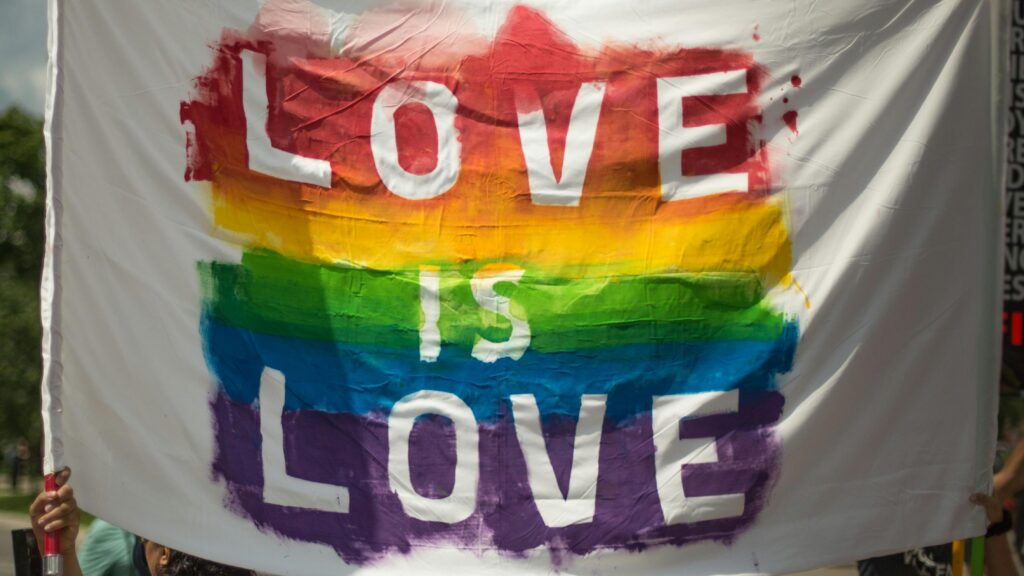
THE LAWWAY WITH LAWYERS JOURNAL VOLUME:-9 ISSUE NO:- 9 ,MARCH 30, 2024 ISSN (ONLINE):- 2584-1106 Website: www.the lawway with lawyers.com Email: thelawwaywithelawyers@gmail.com   UNVEILING IDENTITIES : THE LGBTQ+ AND THE STRUGGLES FOR SOCIETAL ACCEPTANCE IN INDIA Authored by:- Gaurangi Mehrotra Co-author:- Shweta Singh   ABSTRACT   The rights of LGBT (lesbian, gay, bisexual, transgender, and queer) people have changed in India in recent years. Nonetheless, compared to those who do not belong to the LGBTQ community, LGBTQ residents continue to confront particular social and legal challenges. The people have a responsibility to accept the court’s decision with open arms, the government has a duty to make sure the verdict reaches the general public, and the court has a duty to issue just and reasonable orders. Though the Supreme Court of India in the Navtej Singh Johar vs Union of India ruling in 2018 took a step forward for LGBTQ+ rights by striking down a portion of Section 377 of the Indian Penal Code that made homosexuality a crime yet there hasn’t been much of an improvement in the LGBTQ community’s circumstances. LGBTQ individuals did not receive any special treatment from the federal or state governments, nor did they receive social acceptability from the nation’s populace. The study examines the long-standing fight for basic rights by the LGBTQ community and the discrimination they encounter in a variety of contexts, with a focus on transgender individuals and judicial declarations. The paper finally examines the path ahead for the LGBT community and what additional social and legal reforms are required to ensure that LGBT people are treated equally and with complete acceptance in the traditional Indian culture.    KEYWORDS: LGBTQ+, Literature Review, Issues Faced by LGBTQ+ people, Section 377 IPC 1860, The Transgender Persons (Protection of Rights) Bill, 2019, Landmark judgements , same sex Marriage in India    RESEARCH METHODOLOGY   The descriptive research is focused on secondary sources and involves the analysis of books, research papers, articles, and blogs. Verified e-data sources, including SCC online, Indian Kanoon, Manupatra e-database, and others, are the source of the case laws and reports. The study looks at a variety of problems that the LGBTQ group faces in social, legal, and personal contexts. An examination of the LGBTQ community’s legal battle history and equality. The effects of social interventions on communal life and the legal recognition of marriage. A critical assessment of the 2019 Transgender People (Protection of Rights) Act Analysis of judgements that have favoured the LGBTQ community.   INTRODUCTION    “Like the fair Hermia and Helena, let us pursue love fearlessly, regardless of the obstacles that stand in our path” a reference from Shakespeare’s plays “ A midsummer Night’s dream”. This phrase encapsulates the spirit of love, acceptance, and identity that the LGBTQ community celebrates by drawing from the rich tapestry of literature. In a same vein, individuals cannot be treated differently, subjected to discrimination, or denied their basic human rights just because of their sexual preferences, they even need love, identity and acceptance. The fundamental tenet of human rights is the equality of all people. It follows that everyone is entitled to respect and that everyone ought to be treated equally. Anything that compromises its dignity is wrong since it goes against equality and encourages prejudice. The fundamental principles of the Indian Constitution’s preamble, which demand justice and equality of position for all people in all domains—social, economic, and political—are likewise broken by this kind of discrimination. This article examines the legal rights, significant rulings, and continuous struggles that the LGBTQ+ population in India faces in detail.   What is “LGBTQ+” The phrase “LGBTQ+” refers to the following groups of individuals:   Lesbian: A lesbian is a woman who is drawn to other women on a sexual level. Gay : A man who is attracted to another man sexually is considered Gay. Bisexual :Someone who is attracted to people of both sexes sexually is said to be bisexual. Transgender : People whose gender identity and expression diverge from those typically linked with their biological sex are referred to as transgender. Queer: The term “queer” describes a group of people who identify as neither heterosexual nor cisgender (the reverse of transgender). The word “queer” itself refers to a community since its members typically use pronouns rather than only, He, She, etc.   The + in “LGBTQ+” denotes that additional categories, such as pansexual, asexual, intersex, etc., are included in the preceding list, which is not all-inclusive.   LITERATURE REVIEW   In India, the topic of homosexuality has long generated discussion. The literature on the historical aspects of homosexuality and the current state of same-sex relationships in India is reviewed in this section. The research is focused on the characteristics of homosexuality in India during the ancient, mediaeval, British colonial, and post-independence periods. The Rig Veda, which was written around 1500 BC, mentions Thadani, one of the earliest cosmologies in the Rig Veda that is associated with the twin feminine deity Dyava. It symbolises the joining of two females who can be viewed as sisters, mothers, lovers, or other roles. The idea of homosexuality is implied by the ancient writings’ depiction of Yoni as two points of light, which are thought to be twin females. Three genders are described in the ancient sexology treatise Kamasutra: pums prakriti, stri prakriti, and tritya prakriti, which are modern terms for man, woman, and third sex. Lesbians and homosexuals were the subcategories of the third sex. It demonstrates how attitudes towards gender equality and love were more liberal and nonconformist in the past. In the mediaeval era, Urdu poets and Muslim kings’ courts were common places for girls to fall in love. In Tuzuk-i-Babri, it is said that Babur had a romantic relationship with a small kid in his court. In the courts of Pathans and Nawabs, homosexuality was considered the norm. The Chandela monarchs erected the renowned mediaeval sculpture known as Khajurao Temple, which features sensual depictions of men and women flashing their genitalia to one another.

PROTECTION OF COPYRIGHT INFRINGEMENT IN THE INDIAN MUSIC  INDUSTRY: – 

0 Comments

  THE LAWWAY WITH LAWYERS JOURNAL VOLUME:-9 ISSUE NO:- 9 ,MARCH 25, 2024 ISSN (ONLINE):- 2584-1106 Website: www.the lawway with lawyers.com Email: thelawwaywithelawyers@gmail.com PROTECTION-OF-COPYRIGHT-INFRINGEMENT-IN-THE-INDIAN-MUSIC-INDUSTRY   –SWAYAMPRABHA SARANGI  BBA.LLB  SOA NATIONAL INSTITUTE OF LAW  ABSTRACT: –  The music and music industry is the most usurped by the digitalization of technologies. The Indian Copyright  (Amendment) Act, 2012 was enforced to solve the underlying copying of the works and provide security to all  the composers, artists, and lyrists. In this paper, we will come across the exclusive rights of the authors and  owners. We will also get knowledge about the rise of piracy due to the increase in social media use. How these  pirated sites degrade the value of the owners and authors. We would also come to know about the Platformisation  of music and songs and the reallocation of artists by giving them non-film music platforms. Interference of the  telecom industry is the root cause of such Platformisation. We would learn about infringement and its remedies  and how far India needs to go to achieve that upper hand in the music industry  -Keywords: music industry, copyright, infringement, piracy, Platformisation, protection, artist`s rights.  INTRODUCTION: –  Whenever a piece of music is made, it involves the effort, skills, and talent of the following people. Such as; lyrists who writes the script of the song, composer who makes the music and sound recordings of the song, instrumentalists who give the background tone to the song, and last but not least the singer who sings the song or  rather gives his/her voice to the song. Copyright protection is all for the rights of these people and their works.   Copyright is a type of Intellectual property that gives protection to the author, owner, and composer of the music  protection against illegitimate copying and reproduction of songs1. A particular song is a result of the original  brainstorming of various people and when their intellects comes up together a song is made.  The right of the creator of the music i.e., the composer and all kinds of musical works such as instrumental tones and computer graphics used to enhance the song are all the subject matter of the copyright protection of music.2     1Sneha Mahawar, ‘protection of music under IPR law’ (ipleaders.blog), <https://blog.ipleaders.in/protection-of-music-under-ipr-law/>  accessed on 15 March 2024  2 Sreetija Makhal, ‘copyright and music industry’ (wordpress.com), <https://csriprnusrl.wordpress.com/2021/05/06/copyright-and-the music-industry/> accessed on 15 March 2024 The duplication of work is being protected up until the life of the owner plus sixty years after that. If there is  more than one author it will saved till the life of the last author plus sixty years.3  Economically also, this copyright protection helps to have a monopoly over the song. As held by the Madras High  Court in the case M/S Indian Record Manufacturing vs. Agni Music Sdn Bhd (2010)4, if the producer has hired  the composer to make the song for his film then, the producer will be the owner, not the composer. The composer  will be the author of the song. He will be remunerated for the same. If somebody wants to utilize a certain song  for his/her own work, he/she has to take prior permission from the owner. With the permission, it asks for cost  also which is to be given to have access to the song. Cost depends upon the number of places where the songs  will be used. For example, a song is being made and the owner has obtained rights for the whole lyrics, tone,  background music, rhythm, etc. Now, if somebody uses it for different purposes like; advertisement, promotion,  or background for any reality show, he/she has to get permission from the owner. The owner will charge money  on each use i.e., he will charge for advertisement differently, promotion differently, and use for reality shows  differently.   THE PERSONS WHO CAN CLAIM PROTECTION UNDER THE COPYRIGHT LAW: –  Copyright of a music piece in India is not given to one person as a whole but divided into sub-pieces and  protection is assigned to different people included in the making of the music individually. However, the producer  can have sole ownership of the music if he wants and if all the parties agree to it. The Copyright Act, of 19575 provides protection under copyright to the following people.  The lyricist can claim protection under section 2(d)(i)6. It states that whoever writes a literary, dramatic,  or musical work is called the author.  The composer under section 2(d)(ii)7 would be considered the author of the literary, dramatic or musical  work.  A composer adds music and manipulates the graphical notations of the song (musical work) into a fruitful  product. Therefore, under section 2(p)8, the composer can be the author of the musical work. d. Under section 2(qq)9, a singer will also be allowed to claim copyright for his work. A singer is a person  or performer who adds voice to the musical work and in the end, the music reaches the audience in his  voice. It can right put that it is the singer under whom the song is a hit. For example, Arijit Singh. e. Until and unless the music producer has an idea of creating music and to execute that work he hires or  assigns the musicians, composers, lyricists, and singers the song will never probably be made. He not  only takes the initiative but also looks after all the technicalities in recording, equipment or personnel      3ibid  4 M/S Indian Record Manufacturing vs. Agni Music Sdn Bhd (2010)  5 Copyright (Amendment) Act, 1957, No. 14, § 13-1, Acts of Parliament, 1992 (India) sec14  6 Copyright Act, 1957 sec 2(d)(i)  7Ibid, sec 2(d)(ii)  8Ibid, sec 2(p)  9Ibid, sec 2(qq) required, and also broadcasting rights. Therefore, the producer can claim copyright under section 2(uu)10 of the Act.  RIGHTS GRANTED UNDER THE COPYRIGHT ACT, OF 1957: –  Section 14 of the Copyright Act, 195711 provides various rights to all the above persons. These rights basically  deal will all kinds of exploitation to make more profit out of it.  Economic Rights- To

CITIZENSHIP AMENDMENT ACT- LEGAL ISSUES AND STATUS OF JUDICIAL PROCEEDINGS

0 Comments

 THE LAWWAY WITH LAWYERS JOURNAL VOLUME:-9 ISSUE NO:- 9 ,MARCH 15, 2024  ISSN (ONLINE):- 2584-1106 Website: www.the lawway with lawyers.com Email: thelawwaywithelawyers@gmail.com   CITIZENSHIP AMENDMENT ACT- LEGAL ISSUES AND STATUS OF JUDICIAL PROCEEDINGS   Authored by :- Rutuja Santosh Kokare Ismailsaheb Mulla Law College, Satara   ABSTRACT This Article is all about how the Citizenship Amendment Act had an impact in India. The Citizenship Amendment Act (CAA) is an Indian law passed in December 2019. It offers citizenship to persecuted minorities from neighboring countries like Afghanistan, Pakistan, and Bangladesh, who entered India before December 31, 2014. However, it excludes Muslims, sparking controversy and protests across India. Critics argue it undermines India’s secular principles and discriminates against Muslims, while supporters claim it protects persecuted minorities. The Citizenship Amendment Act (CAA) is a law enacted by the Indian government in December 2019. It amends the Citizenship Act of 1955 to grant Indian citizenship to certain religious minorities from three neighboring countries: Afghanistan, Pakistan, and Bangladesh. Specifically, the CAA offers a fast-track route to citizenship for Hindus, Sikhs, Buddhists, Jains, Parsis, and Christians who entered India illegally or overstayed their visas before December 31, 2014, and haven been persecuted. The key controversy surrounding the CAA revolves around its exclusion of Muslims from the list of eligible religious minorities. Critics argue that this selective approach violates the secular principles enshrined in the Indian Constitution and discriminates against Muslims, the largest religious minority in India. They see the law as part of a broader agenda by the ruling Bharatiya Janata Party (BJP) to marginalize Muslims and transform India into a Hindu-majority nation. Opponents also fear that the CAA, when combined with other proposed measures like the National Register of Citizens (NRC) and the National Population Register (NPR), could be used to target and marginalize Muslims by questioning their citizenship status. This fear has led to widespread protests across India, with demonstrations erupting in major cities and universities since the passage of the CAA. KEYWORDS: Persecution, refugees, religious discrimination, human rights.   INTRODUCTION The president of India gave its assent to the Citizenship Amendment Bill on 19th of December 2019. The implementation of this act begins on the 11th of March 2024 and is applicable within the territory of India. It’s not the first time that this Act got amended, earlier around nine times CAA was amended. This Act outlines the ways in which a person can acquire Indian citizenship, with the most common method being naturalization. To be eligible for naturalization, a person must have resided in India for one year prior to the date of application and for an aggregate of eleven years over the previous fourteen years. The Amended Act brought a drastic change, specifically for people from Pakistan, Bangladesh, and Afghanistan who are Hindu, Parsi, Christian, Sikh, Buddhist, and Jain, and who are non-Muslim. This law allows them to acquire citizenship in India if they have been residing in India prior to 31st December 2014 then instead of the aggregate of eleven years they can acquire citizenship in just six years.  The Universal Declaration of Human Rights, adopted in the year 1948, is the first document that talks about human rights. Article 14 of the UDHR says about freedom from discrimination, which means no person shall be discriminated against on the grounds of sex, race, color, language, religion, political or another opinion, national or social background association with minority group economic status, birth, or other status.  Therefore, if an individual has been persecuted on religious grounds and fled to neighboring countries to seek asylum. Persecution refers to the systematic misstatement or operations of individual or groups based on their beliefs, race, religion, ethnicity, or other identical characteristic. It often involves harassment discrimination violence or deprivation of rights aimed at intimating or controlling the target individuals or groups. Asylum refers to the protection granted by a country to an individual who has fled their own country due to fear of persecution violence or danger. It is a legal status that allows these individuals known as refugees or asylum seekers to reside in the host country and to be protected from being returned to their home country where they may have faced harm. Asylum is typically granted to those who can demonstrate a well-founded fear of persecution. Similarly, the two terms immigrant and illegal immigrants differ in the way that an immigrant is someone who legally moves to a country not his own with the intention of residing there permanently or for an extended period. Whereas, an illegal immigrant is someone who enters, resides, or works in a country without proper authorization as per the said country’s law. They do not have legal permission to be in the country, and their presence may violate immigration regulations.   LEGAL CHALLENGES FACED BY THE CITIZENSHIP AMENDMENT ACT The implementation of the Citizenship Amendment Act has had a drastic impact on the citizens of India. However, Immensely disquieting, is that even though the Act faces legal challenges, the government has chosen to go ahead with the rules. Shiromani Gurdwara Parbandhak Committee and several refugees welcomed this Amended Act. On the other hand, the Indian Union Muslim League has filed a petition in the honorary Supreme Court for the prohibition of the Citizenship Amendment Act 2019 and Citizenship Amendment Rules 2024. The Indian Constitution,1950 part II, specifically deals with the aspect related to citizenship in India. Part II provides such provisions about which people shall be citizens of India after the partition of 1947 and even what conditions are to be followed by an individual who is seeking citizenship in India after the independence. Several people are protesting against the Act, claiming that it violates Article 14 of the Indian Constitution by discriminating based on caste, creed, and religion. In Ramesh Prasad v. State of Bihar, it is observed that the aim of both concepts of ‘equality before the law’ and ‘equal protection before the law’ is to give equal justice. The Act aims to provide citizenship to individuals who